
Diamond Colour Grades – A Complete Beginner’s Guide
As one of the 4 C’s, Colour is very important when it comes to assessing the quality of a Diamond but what is colour when it comes to Diamonds?
That is what I’m going to cover in this post as I break down all the things you need to know about colour in Diamonds and it doesn’t matter whether you are just looking to learn or are in the process of buying a Diamond or engagement ring, there is some useful information in here for you.
Just so you know that this isn’t some generic post, I’m Paul Haywood FGA DGA and I’m a fully qualified Gemmologist and Diamond Grader.
What is Colour in Diamonds?
Colour in Diamonds refers to the body colour of the stone and there are two ways that colour is assessed:
The first is how free from colour the Diamond is, which applies to around 98% of all Natural Diamonds and even though they are referred to as colourless Diamonds, in reality this can range from them being completely colourless to having a notable tint, which is commonly yellow but can also be brown or grey.
When it comes to assessing the colourless Diamonds, the most commonly used grading scale is the one developed by the GIA, which ranges from D (colourless) to Z (tinted).

The second is Fancy Colour Diamonds, which makes up the other 2% of Natural Diamonds and these are Diamonds that possess a notable body colour such as Pink, Blue, Yellow or very rarely Red and they are graded on the three following criteria:
- Hue – this is the characteristic colour of the stone and this can be singular such as Pink or Blue or include modifiers such as Brownish Pink (the main hue is always listed last)
- Saturation – this is the strength of the colour within the Diamond
- Tone – this is how light or dark the colour is within the Diamond

Saturation and Tone are combined and used to describe the Diamond, for example “Light”, “Fancy” or “Fancy Vivid”, which is then combined with the Hue to give the descriptive name for that Coloured Diamond, such as “Fancy Yellow” or “Fancy Intense Pink”.
As one of the 4 C’s, Colour is not only used to assess the quality of the stone but also has an impact on a Diamond’s price, with stones having a better colour, generally being worth more.
Diamond Colour Chart
As the majority of Diamonds are “colourless”, let’s take a look at these grades in more detail, so that you have a better idea of what you are looking at when it comes to buying a Diamond.
D – F Colour (Colourless)


The top three grades for Diamond colour are D, E and F and all of these are colourless, meaning that there is no visible colour in the Diamond when viewed table up or from the side but if they are all colourless, then what is the difference between them?
Having looked at a fair few D – F colour Diamonds, the only way I can describe it is that D colour Diamonds look brighter than an E colour, which looks brighter than an F colour and this is something that is difficult to see in images but is noticeable when you see stones in person.
G – J Colour (Near Colourless)


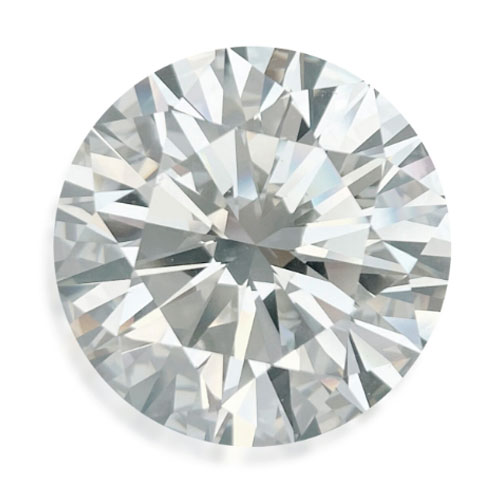
The next 4 grades are classified as near colourless, meaning that there is a very faint tint of colour that can be seen in the Diamond.
But I don’t quite agree with all 4 being included in this category as G colour Diamonds are also colourless when viewed table up and from the side but not as bright as D – F colour Diamonds and most people only start to notice any hint of colour at H and this is only when the stone is viewed from the side, they look colourless when viewed table up.
I and J colour Diamonds having a more noticeable tint, especially when viewed from the side and the tint starts to become noticeable table up.
K – M (Faint Tint)


The next three grades are the lower end of the colour grades that are sold by the majority of retailers as these Diamonds have a much more noticeable tint that can be seen when the Diamond is viewed table up and is obvious when viewed from the side.
N – R (Very Light Tint) and S – Z (Light Tint)


Even though the GIA will grade Diamonds in this range, they are most commonly referred to as Tinted Diamonds as the tint is very noticeable in the stone, whether viewed table up or from the side and these Diamonds are actually quite difficult to buy as most Diamond retailers and dealers don’t like to stock them as they aren’t very desirable.
This is because they aren’t really colourless but the colour isn’t strong enough for it to be classed as a Fancy Colour, putting them in a kind of no-man’s land that only appeal to a small number of potential customers.
What Colour Diamond Is The Best & Which One Should You Buy?
The best colour for Diamonds is a D colour as this is the highest grade for colourless Diamonds but should you actually buy one as natural D colour Diamonds sell for a premium due to their rarity?
There are only really two reasons why you would realistically buy a D colour Diamond over an F or G colour and they are:
- You have a very good budget that allows you to buy a very high quality stone (ideally you would want to match a D colour with Flawless Clarity and Excellent Cut if this is the case)
- You want to brag that you have a D colour Diamond and you will have to tell people as no-one will know just by looking at it
This is because when a Diamond is mounted in a piece of jewelry, it is nearly impossible to tell the difference between a D colour and F/G colour Diamond as they are both colourless when viewed table up (which they will be when they are set), especially if you don’t have other Diamonds to compare it to.
For the majority of Diamond buyers, going for a F, G or H colour Diamond that has good Clarity, such as a VS1, VS2 or good SI1 and very good or excellent Cut quality is going to the best option as you will get a beautiful looking stone that to most people will look as good as a D Flawless without the premium price tag.
How Are Diamonds Colour Graded?
So we know what the colour grades for Diamonds are and also which one you should consider buying but how are Diamonds actually assigned a colour grade?
Well, there is a very well-defined process for doing this and in order to be able to colour grade effectively, you need:
- The Diamond to be loose and clean (only estimates can be given for stones set in jewelry)
- A neutral environment, this is usually a slightly darkened room that has white or grey walls, the grader should also be wearing neutral colours
- A controlled light source, this is usually a daylight lamp
- A white background for the Diamonds to be viewed against, such as a grading tray (pictured below) or GIA Diamond Dock
- A set of master stones to compare the Diamonds that are being graded to
- Training and experience
But the equipment and environment are only part of the grading process, the other involves actually looking at the Diamonds and this process involves:
- The grader needs to get their ‘eye in’ by observing each of the master stones in the controlled grading environment before looking at the stone to be graded, this is usually done by placing the Diamond table down and looking through the pavilion of the Diamond (I usually look between ⅓ and halfway between the girdle and culet) as this gives a truer colour than looking through the table
- The grader will then place the Diamond to be graded, table down in the grading area to give themselves an initial estimate of the colour
- They will then take a master stone of the colour they initially estimated an place it in the center of the grading tray and place the Diamond being graded around 1cm to the left of the master stone and check the colour, they will then move the Diamond being graded to the right of the master stone and check the colour again, with there are three possible outcomes:
- If the Diamond being graded appears darker when it is to the left of the master stone but lighter when on its right, then the Diamond being graded has a colour which is the same as the master stone
- If the Diamond being graded appears darker when to the left of the master stone but the same colour when on the right, then the Diamond being graded is darker than the master stone
- If the Diamond being graded appears equal to the master stone when placed on its left and lighter when placed to the right, then the Diamond being graded is lighter than the master stone
- If the stone is lighter or darker than the master stone, then step 3 will have to be repeated with a master stone that is a higher or lower colour grade and this may need to be done multiple times until the correct colour grade is found
With gem labs such as the GIA, more than one person will independently grade the colour as this increases the chances of the grade being accurate.
If a Diamond is mounted in a piece of jewelry, it makes accurately grading the colour very difficult and it will only be given an estimated colour grade.
Conclusion
Colour is one of the most important factors when it comes to the quality of a Diamond and it can have a big impact on the value of a Diamond as stones with better colour are worth more.
But after reading this post, you should have a much better understanding of:
- What colour in a Diamond means
- The different colour grades
- Things to consider when buy a Diamond
- How the Diamonds colour is graded
But if you have just jumped straight to the conclusion and are looking for some quick advice, then:
- D – H Colour Diamonds are all colourless when viewed through the table
- You will only start to notice a hint of colour through the table at an I colour
- For most buyers, an F, G or H Colour Diamond will be perfect
- M – Z Colour Diamonds are known as tinted diamonds and are quite difficult to buy
So I hope that you not only enjoyed reading this post but also found it helpful.

I'm Paul Haywood FGA DGA, the owner and founder of Haywoods Gems, I'm a fully qualified Gemmologist and Diamond Grader from the Gemmological Association of Great Britain.


